
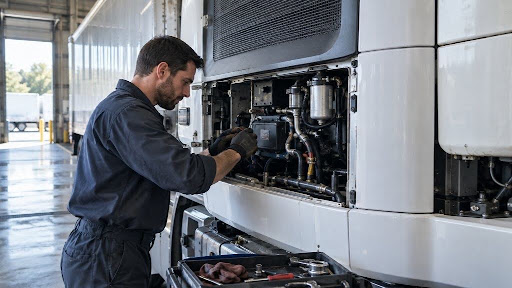
For refrigerated operators, Sonsray Fleet Services provides Thermo King-authorized transport refrigeration equipment, parts, warranty support, and preventive maintenance programs. Planned service can help identify developing reefer problems before they threaten cargo temperatures or disrupt dispatch, although maintenance cannot prevent every failure.
Sonsray Fleet Services lists 13+ service centers, 24/7 support, and locations in California, Nevada, Connecticut, New York, and New Jersey. Its contact information is a starting point for questions about service and support.
Why Do Reefer Failures Disrupt Deliveries?
Preventive maintenance can help identify developing reefer problems before they interrupt temperature control or force an unplanned stop. This can reduce the chance that a fault disrupts a delivery. A reefer unit controls cargo temperature and is separate from the truck or trailer it serves, so the vehicle may remain mechanically operable even when refrigeration is not.
If a unit fails or a temperature deviation appears, the operator may need to assess the load’s exposure and condition before deciding whether it can continue, needs corrective action, or requires another temperature-controlled vehicle. Dispatch may need to revise the route, notify the receiver, and coordinate repairs. The truck or trailer may also be unavailable for its next temperature-controlled assignment. Cargo protection, delivery timing, and vehicle availability can all be affected.
For example, a fault found during a pre-trip check can be assessed and repair arranged before dispatch. If the same fault appears after the route is underway, load assessment and dispatch changes must happen under time pressure. Planned maintenance reduces avoidable risk but cannot guarantee uninterrupted operation.
What Can Routine Reefer Maintenance Catch?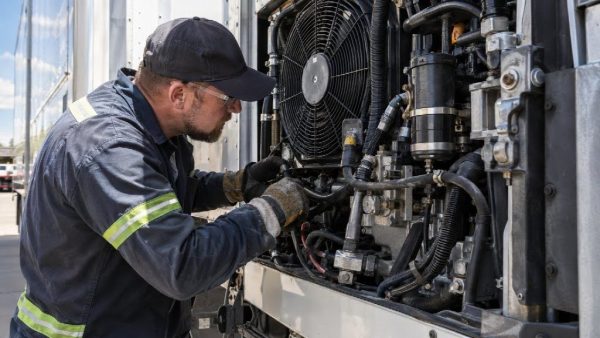
Recurring operator checks and scheduled technician service can identify warning codes, unusual operation, and temperature-control concerns before they become more disruptive faults. Follow the equipment maker’s service guidance and record maintenance, repairs, and recurring symptoms. Report warning codes, changes in unit operation, and temperature concerns promptly, and share the details with the service team. Technicians can diagnose and service refrigeration equipment, while fleet maintenance teams track separate truck and trailer needs. Service timing depends on the unit and its maker’s instructions, so one interval will not suit every reefer. For the Thermo King T-590, T-690, and T-1090 refrigerated-truck units Sonsray Fleet Services lists, the stated maintenance interval is 2,000 hours. That interval applies to those models, not to every reefer. See the listed refrigerated-truck units and confirm the applicable schedule for your equipment.
Coordinate Reefer, Truck, and Trailer Service
A reefer service visit does not automatically cover the truck’s powertrain or the trailer’s condition. Track refrigeration unit maintenance, diesel truck service, and trailer repairs as related but distinct responsibilities. For example, a reefer warning code calls for refrigeration diagnostics, a starting problem may require truck electrical or engine service, and a damaged trailer door may need trailer repair.
Shared scheduling can help coordinate the right technician and reduce duplicate downtime. If a truck is already booked for service, check whether the reefer or trailer also needs attention and arrange suitable work during the same out-of-service period. Report symptoms clearly so the service team can identify the system and work needed.
Federal periodic inspection is a separate compliance requirement, not a substitute for refrigeration maintenance. Covered commercial motor vehicles must pass inspection at least once every 12 months, and the required documentation must be carried with the vehicle under 49 CFR § 396.17. A combined maintenance record should identify the reefer unit, vehicle, reported symptoms, work completed, and upcoming service needs.
How Can Maintenance Fit Dispatch Schedules?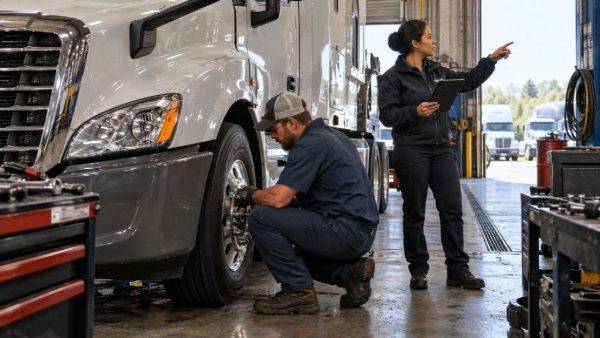
Maintenance fits dispatch schedules when fleet teams forecast service needs, book work around vehicle availability, and confirm reefer readiness before assigning temperature-sensitive cargo. Use this sequence during fleet planning. Timing depends on equipment guidance, how heavily units are used, route demands, and available fleet capacity.
- Review service intervals, operating and service records, and open concerns, including recurring alarms or temperature deviations, before finalizing dispatch plans. Do not wait for a breakdown.
- Coordinate appointments with planned downtime, route changes, or other periods when a vehicle is already out of dispatch, where practical. When evaluating providers, ask about scheduled servicing and on-site options. We describe both through FleetCare preventive maintenance programs.
- Keep dispatch, drivers, and maintenance staff aligned on unit status and unresolved concerns. Confirm the reefer is ready before assigning a temperature-sensitive load, and document any required follow-up.
How Does Sonsray Fleet Services Fit?
As a Thermo King authorized dealer, Sonsray Fleet Services offers transport refrigeration equipment, parts, warranty support, diesel truck repairs, trailer service, telematics, and preventive maintenance programs, as described in its service listings.
Thermo King authorization can matter when your fleet needs support for that equipment, but availability and program scope may vary by location. Confirm service availability and whether a program fits your equipment, fleet size, operating conditions, and location.
Make Maintenance Part of Dispatch Planning
Before the next dispatch cycle, compare each reefer’s operating hours and open fault notes with its manufacturer’s service schedule. Flag units due for service or showing recurring alarms for review before assigning temperature-sensitive cargo.
To assess planned coverage, review Sonsray Fleet Services’ preventive maintenance programs. FleetCare offers scheduled or on-site maintenance. Include your fleet size, equipment, operating conditions, and each unit’s make, model, and hours when requesting a tailored quote.
Then contact a location to confirm service availability and timing. The Sonsray Fleet Services contact page lists 24/7 support for transport refrigeration equipment, parts, and service inquiries, with locations in California, Nevada, Connecticut, New York, and New Jersey. Ask whether service can be scheduled around the unit’s next dispatch window.





Comments